The Acceleration of Fashion Aesthetics via Social Media (Style Remix Culture)
For my Discovery Project, I wanted to integrate style and fashion trends, examine how they connect to social media, and discuss how social media is used to amplify these trends. Social media platforms such as TikTok, Instagram, and Twitter/X have transformed the way trends are created, circulated, and consumed by audiences. Social listening indicates that trends are driven less by traditional fashion houses and more by hashtags, influencers, and everyday users who remix trends in real time. Popular tags such as #OOTD and seasonal runway identifiers reveal how quickly aesthetics gain momentum and visibility. Short-form videos and styling content further increase engagement and accelerate trend adoption. Through social media and social listening, it becomes easier to visually identify where these aesthetics originate and how they circulate into mainstream fashion looks.
Trend 1 — “Hashtag Culture Drives Fashion Discovery”
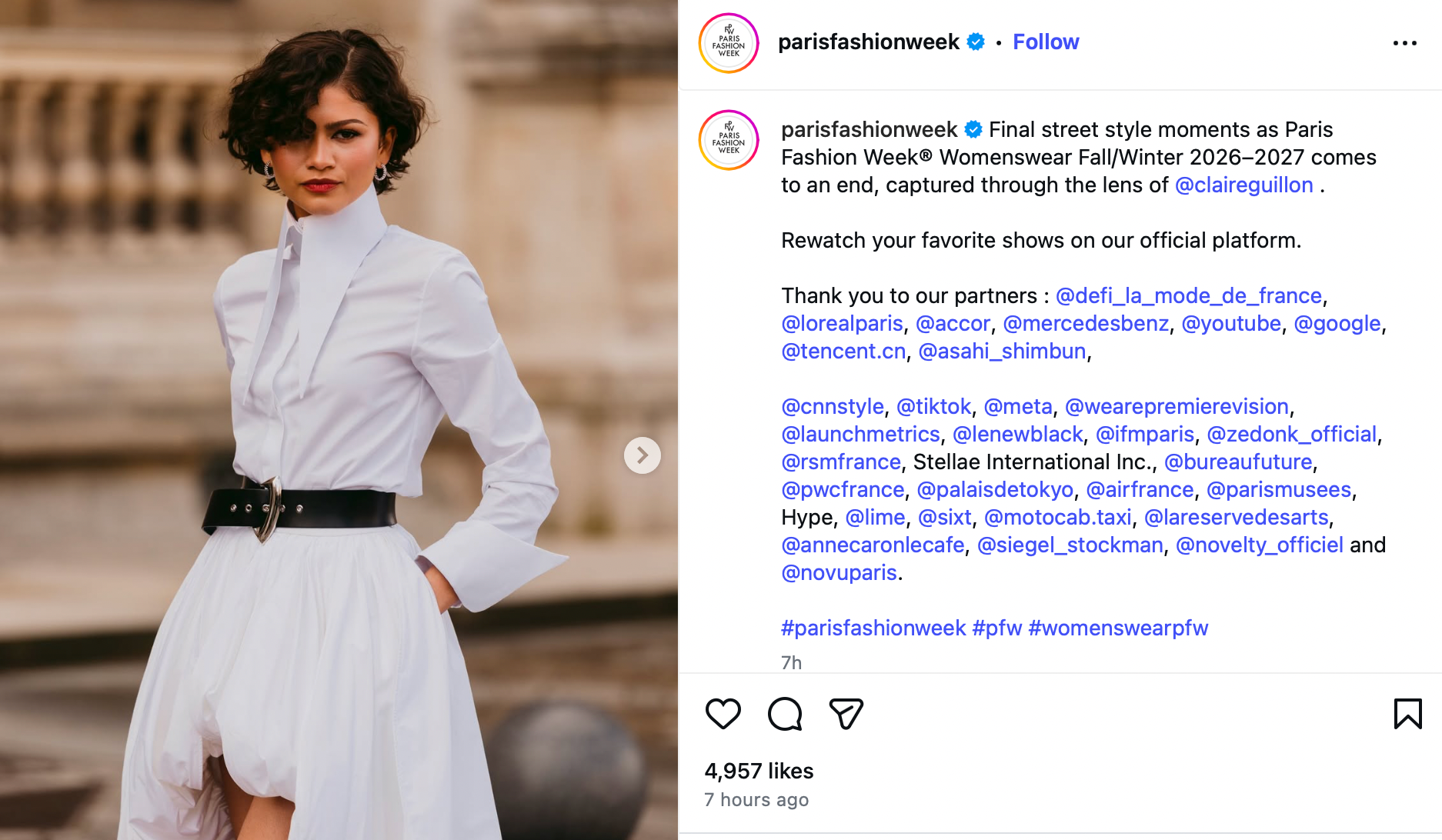
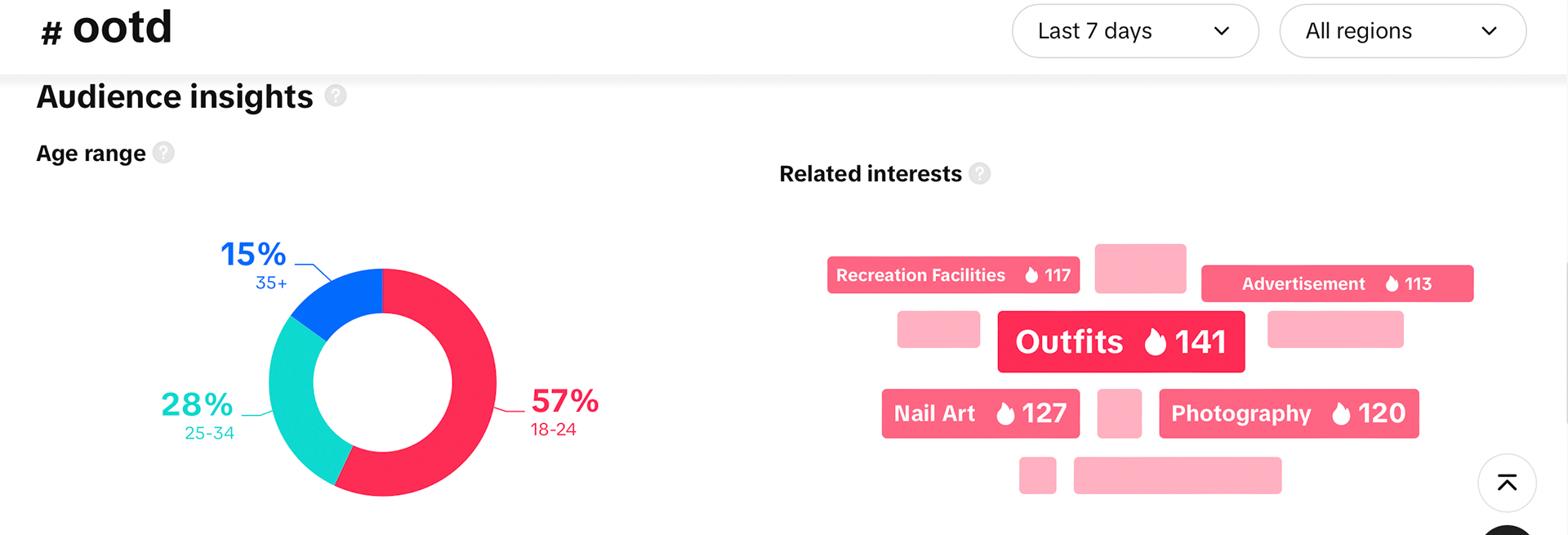
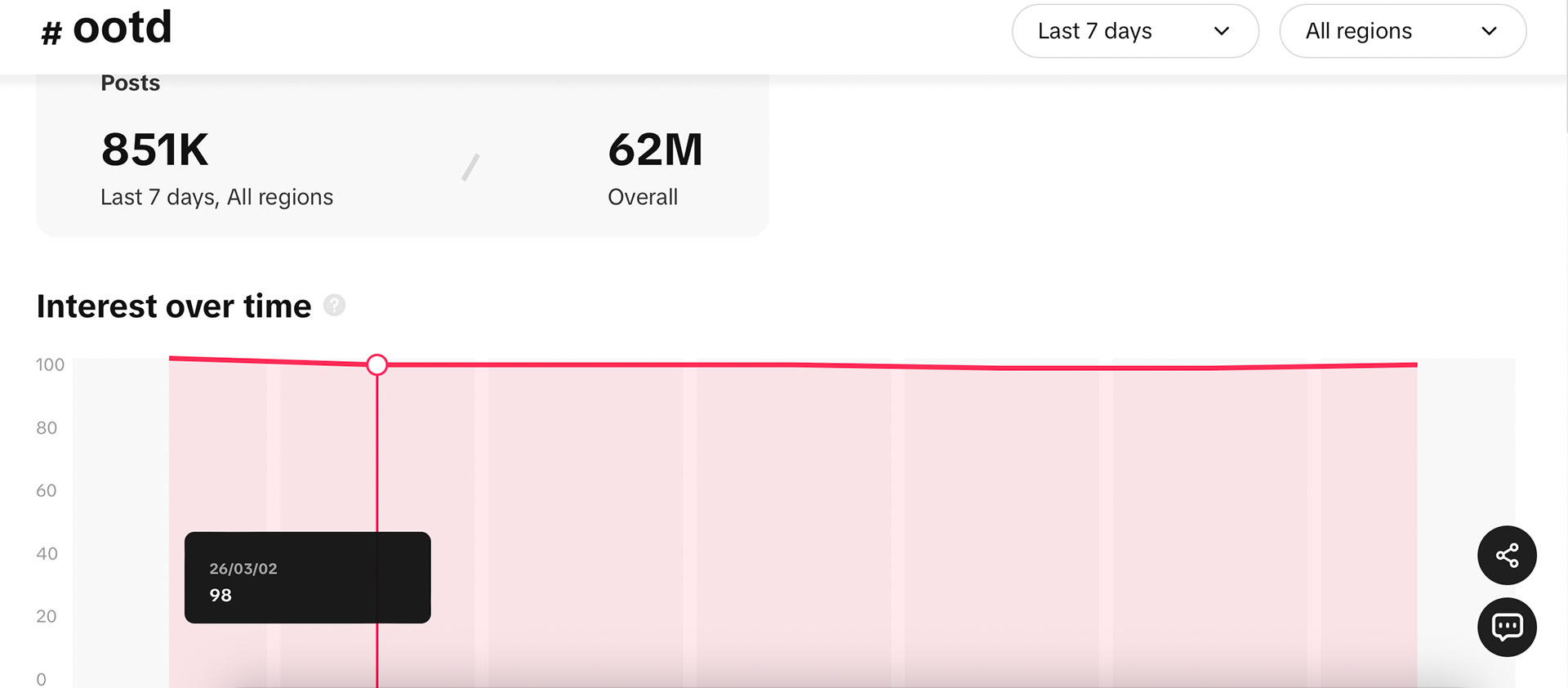
Audience engagement is driven primarily through short-form tags that connect users to trends and aesthetics. I wanted to include a TikTok video featuring one of the top Paris Fashion Week clips currently circulating on the platform. Incorporating a clip from Paris Fashion Week is especially timely for this project, as it allows viewers to observe fashion trends unfolding in real time. These tags transform everyday posts into searchable fashion moments, empowering users to shape what is trending. Hashtags such as #fashion, #style, and #OOTD dominate TikTok and Instagram feeds, organizing content and helping users discover trends quickly. In this way, everyday users, not just brands, influence and define what gains traction online. After exploring the analytics for #OOTD on TikTok, I observed that it maintains a consistent level of interest across multiple regions, demonstrating its sustained global relevance.
Trend 2 — Influencers as Next-Gen Fashion Authorities
Influencers, rather than traditional fashion magazines, are often driving what people wear and discuss. As social media engagement has increased across brands and the fashion industry, many users now leverage their platforms to initiate trends or reinterpret existing styles. Social figures identified as top fashion influencers in 2026 are shaping audience preferences and, in some cases, influencing trends before designers do. These creators transform runway content into relatable, everyday looks, blending high fashion with personal style. Audiences gravitate toward this more accessible content, as consumers tend to trust products more when they see individuals trying them on, styling them in real time, and actively engaging with followers. For this reason, I included a clip from Madeleine White’s Instagram. She is recognized as a leading fashion influencer in 2026 and is widely known for her outfit transformation videos, which exemplify how influencers shape contemporary fashion conversations.
Trend 3 — Aesthetic Fatigue and the Rise of Personal Remix Culture
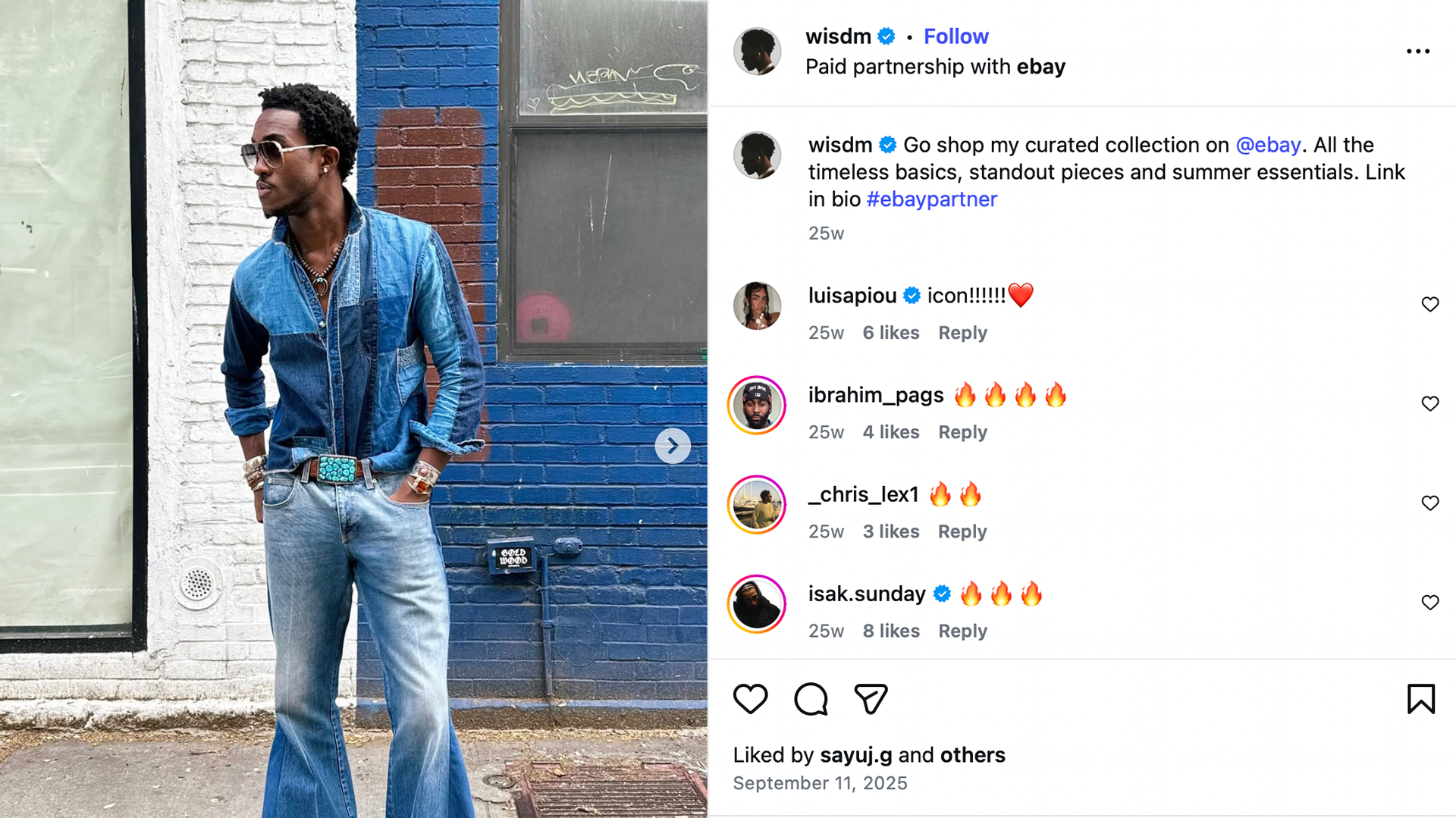
While aesthetic trends dominate fashion conversations online, social listening reveals a growing sense of fatigue with rigid aesthetic labels. On TikTok and Instagram, creators are increasingly questioning the pressure to fully commit to one “core” identity at a time. From my personal observation, most people who are interested in fashion and trends do not identify with just one aesthetic. Instead, they blend different ideas and concepts by mixing fashion pieces from various outfit aesthetics. Rather than demonstrating strict aesthetic loyalty, many users now showcase mixed-style outfit posts that combine multiple influences, signaling a shift toward personalization over conformity. This movement toward remixing aesthetics suggests that while social media fuels rapid trend cycles, it also creates space for individual self-expression beyond algorithmic categories. As a result, a more democratic fashion language emerges, where personal expression outweighs brand diktat and everyday fashion is elevated. I included an image from @wisdm (Wisdom Kaye’s Instagram page), as he is a well-known influencer and stylist who frequently reinterprets trending aesthetics rather than copying them directly.
Conclusion
In conclusion, social listening and the rise of social media have fundamentally reshaped how the fashion industry is influenced, interpreted, and consumed. Consumers are increasingly drawn to authenticity and individualistic style choices rather than passively following traditional fashion authorities. Tags, short-form videos, and interactive engagement mechanisms accelerate trend visibility while allowing audiences to actively participate in shaping fashion discourse. These digital structures have redistributed cultural authority within the industry. Designers and legacy publications no longer function as the sole critics of style; instead, influence is dispersed across creators, micro-influencers, and everyday users who collectively construct and redefine aesthetic movements in real time.
Ultimately, fashion has shifted from a top-down model to a participatory ecosystem where trends are not simply dictated but collaboratively produced. Through social listening, it becomes clear that contemporary fashion culture thrives on immediacy, remixing, and community-driven expression.